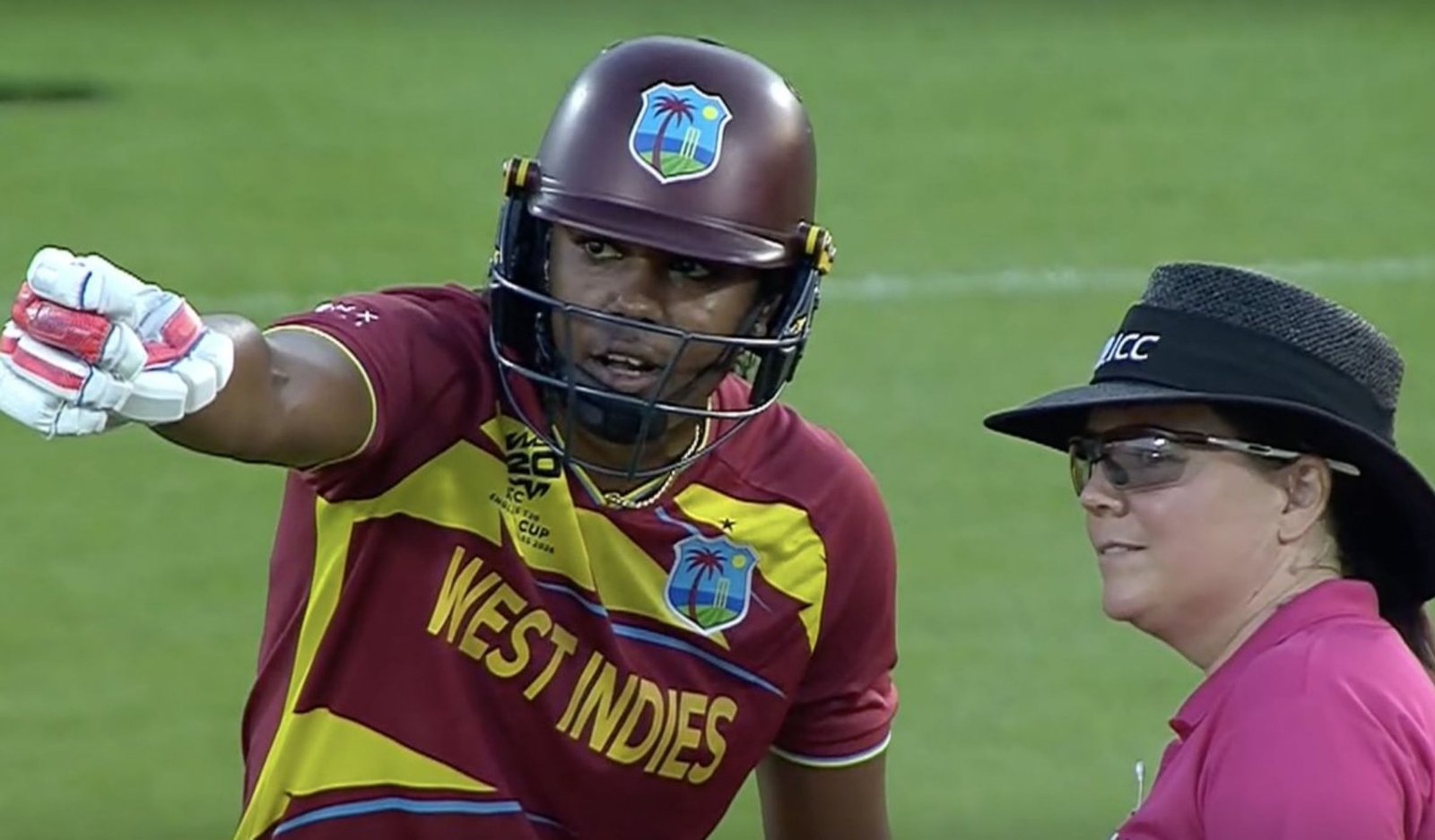
After the controversial dismissal of West Indies captain Hayley Matthews sparked a debate over technology in cricket, YOU offered your views. It became one of the hot topics throughout the game, with Matthews wondering how such a decision could be made given all television replays seemed to show there being no contact between bat and ball at that stage.
It came early in the West Indies run chase when Matthews, having batted fluently and looking to take her side towards a big score. The on-field umpire also saw no wear and tear on her hand. England did appeal for a caught-behind, but her decision was simple: not out, England chose to review, which means sending it upstairs to the third umpire.
Watching replays on the big screen, many in the crowd could see there was light between bat and ball. But the third umpire was only concentrating on the UltraEdge technology that showed a spike as the ball passed very close to the bat. On the basis of that evidence, Matthews had his decision overturned. The West Indians skipper seemed surprised with the decision as he went off the field not looking too pleased.
Matthews said after the match she was annoyed by the call. From where she stood it appeared a clear distance between bat and ball, so much that “it wasn’t pretty how they could make the decision,” as Burns put it. She argued that the noise captured by UltraEdge could also be produced from wherever in actual fact it’s been hit, perhaps the handle.
Matthews however refrained from openly criticizing the officials but expressed disappointment. “The third umpire had no option but to look at the technology he is given and take a call based on what was presented,” she said. Still, she insisted that the visual evidence did not justify what resulted in ultimately being a conviction.
That was a crucial dismissal in the context of the game. Matthews is the West Indies’ key player and her wicket reduced their hopes of reaching England’s score to rubble. West Indies fell behind the required run rate after she departed, and although Dottin did take her time in contributing with the bat.
Earlier, England had set up a good target with a fine batting performance. Danni Wyatt-Hodge was instrumental, with a spectacular innings which turned control of the match in her side’s favour. There were gifts aplenty as England’s batters profited from the odd dropped catch and a lack of consistency at crucial moments, especially in slipping.
West Indies, too, had their moments of dropped catches. England’s bats defended well and their collaboration was able to make up for a few expensive mistakes – but dropped catches meant Pakistan could have made it more defensible. Those mistakes always piled the pressure back on to the West Indies batting unit in their chase.
In a matter of minutes after the match, attention switched from England winning to what technology means in cricket. Though products like UltraEdge are intended to help umpires make the right call, examples such as this raise further suspicion over whether technology should always override human perception. Other observers suggested that visual replays, which may even point to an obvious contradiction of the technology’s conclusion should always be weighed more carefully with both pieces of evidence before a final verdict is reached.
The loss now shifts the focus for Matthews and West Indies to regrouping ahead of future engagements. However, the controversial removal itself will probably continue to make headlines for weeks. This was a reminder yet again, of how technology may have increased the likelihood of cricketing decisions being made correctly but left fans, players and experts to still discuss whether it was indeed correct.
Read more: Netherlands Women vs South Africa Women Match Preview